Plenty of Jackson County land is reached by a dirt road, a farm path, or a track across someone else's field. The question is never whether you can drive to the parcel today — it is whether you have a recorded legal right to do so forever, and what that road is like in February.
The Three Situations You'll Find
- Frontage on a public road. The parcel touches a county- or state-maintained road. Cleanest case — confirm the road is actually publicly maintained, not just publicly used.
- Recorded easement. The parcel is reached across other private land, and a written easement is recorded in the county's official records. Read it: width, permitted uses, who maintains it, and whether it allows utilities to be run along it.
- No recorded access. The parcel is landlocked. Sometimes fixable — by negotiating an easement or, in limited cases, through Florida's statutory way-of-necessity process — but never assume a fix. Price and plan accordingly.
Questions Worth Asking on Any Parcel
- Is the access road public or private? Who maintains it, and is there a written maintenance agreement?
- Does the easement allow what you plan — a home, farm equipment, logging trucks, utility lines?
- Is the easement wide enough for a driveway that a septic truck, well rig, or fire engine can use?
- Does your title insurance actually cover the access, or is it excepted?
Legal Access Is Not the Same as a Good Road
A recorded easement settles whether you may use the road. It says nothing about what that road is like to live on, and that is the part buyers moving in from out of the area consistently underestimate.
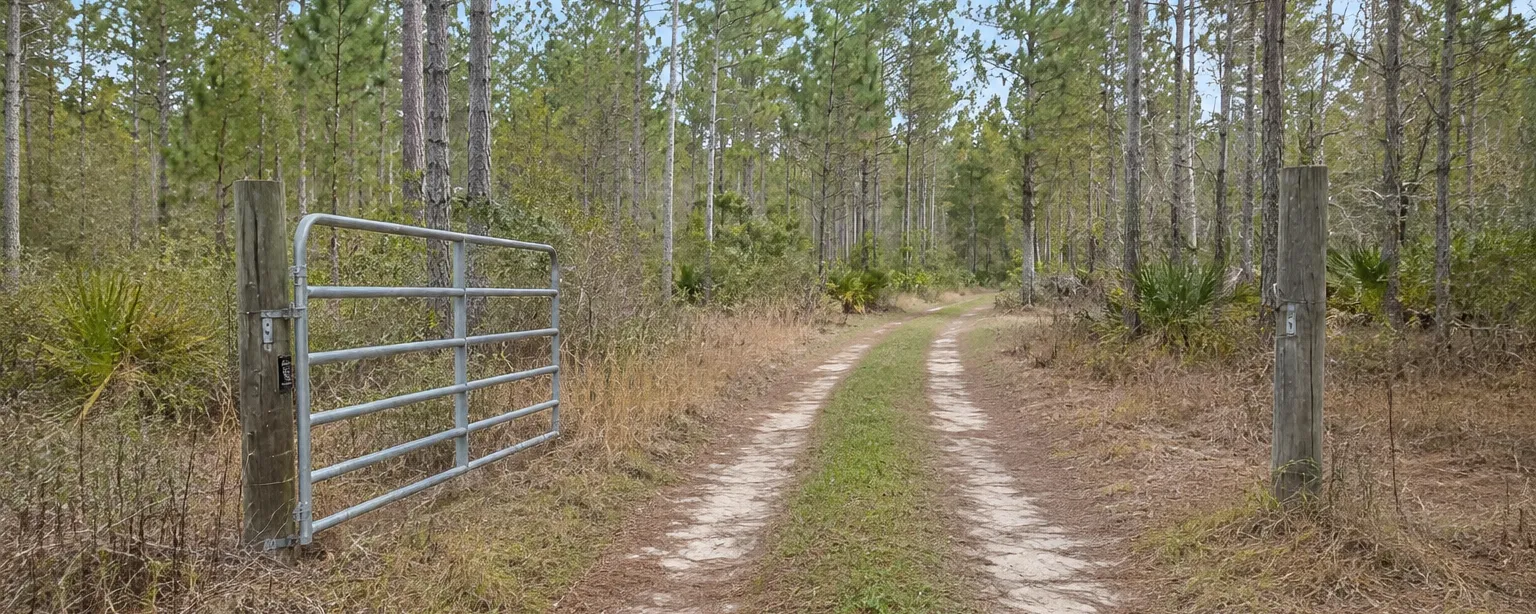
Unpaved roads here are sand. That is the native soil across most of the county, and sand behaves in a specific way: it is generally passable when wet, because water drains straight through it, but it ruts under heavy loads and gets soft and loose in long dry spells — the kind of soft that will bury a two-wheel-drive car to the axle in a low spot. Where a road washes badly, clay is hauled in and spread to bind the surface and slow erosion. That is why some stretches run reddish and others, sometimes the same road a mile on, are plain sand. The red is added material, not the ground underneath.
Whether the county maintains the road is the question that actually governs your life there. A county-maintained road gets graded on the county's schedule, not yours. A private road is maintained by whoever the maintenance agreement says — and if there is no agreement, by whichever neighbor is willing to pay for it that year. Ask before you buy:
- Is it on the county maintenance list? Not "does the county sometimes grade it" — is it formally on the list. The Road Department can tell you.
- How often is it graded, and after what? Washboarding and potholes return quickly on a sand road carrying daily traffic.
- Does the school bus run it? Districts will not always send a bus down a road they consider unmaintained, which can mean driving children to a paved stop.
- Will a fire truck, ambulance, or delivery truck make it? Ask specifically about the low spots and any culvert or wooden bridge on the route.
- Who pays when it fails? On a private road, that is the owners — and hauled clay, culverts, and grading are not cheap.
Dust in dry weather and washboard ruts are real, ongoing annoyances for people who live at the end of these roads, not charming rural character. None of that makes a parcel a bad buy — a great many good properties in this county sit on dirt. It means drive the road yourself, ideally after a hard rain and again in a dry stretch, and price grading or a load of clay into what the place will actually cost you.
Why This Matters More on Cheap Land
Access problems cluster at the low end of the market. A parcel priced dramatically under its neighbors usually has a reason, and no recorded access is the most common one in this county. That can still be a good buy — if you price the fix into the offer and confirm the fix is possible before closing.
Where This Comes Up Most
Long private roads are the norm in the county's outer reaches. Expect to spend more time on access questions around Bascom and the northeast, where remote parcels are often reached across other people's land, and around Malone, where large farms have been divided among family members over generations without always recording the access that went with each split. Along the US-90 corridor through Grand Ridge and Cottondale, the wrinkle is different — old rail-adjacent and utility easements crossing parcels that nobody thinks to mention.
Next check: Zoning & Land Use ›